Showing posts with label history. Show all posts

Monday, July 01, 2013

What is the greatest number of English monarchs to be alive at once?

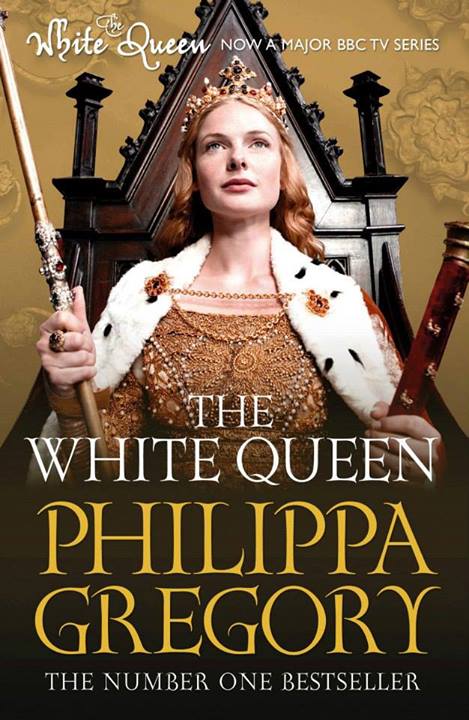
I was thinking about the Wars of the Roses the other night (partly as a result of the BBC series The White Queen, based on the Philippa Gregory novels. There are 5 English monarchs who feature in the series, and they all were alive during 1470-71:

  • Henry VI (1421-1471), Lancastrian claimant to the throne
  • Edward IV (1442-1483), Yorkist claimant to the throne
  • Edward V (1470-1483), Edward IV's son and successor
  • Richard III (1452-1485), Edward IV's brother and probable killer of Edward V
  • Henry VII Tudor (1457-1509), eventual victor of the Wars of the Roses

This set me to wondering what the greatest number of English monarchs to be alive at once is (excluding consorts like Elizabeth Woodville and so on).

I could think of a few other possible times where there were plenty alive at once. Just before Victoria's death, for example, her successors Edward VII, George V, Edward VIII and George VI were all alive, which gives us another 5. They could conceivably have all appeared in the same photograph as well!

But I suspect the winning period is from 1683-1685, where the following monarchs were all alive:

  • Charles II, king of England until his death in 1685
  • James II (1633-1701), his brother, deposed in 1688
  • Mary II (1662-1694), James' daughter
  • William III of Orange (1650-1702), Mary's husband but co-regent and continued to reign after her death
  • Anne (1665-1714), Mary's sister, who died without surviving children
  • George I of Hanover (1660-1727) was Anne's closest living Protestant relative at her death - the first 50 or so were all Catholics!
  • George II (1683-1760), George's son

That makes 7, due to one person being deposed by Parliament, a co-regency, several people dying childless and the throne passing to an older distant relative! I can't find any other points in history with even 5 or more, so I suspect 1683-5 is the winner... Any comparative results for other countries?

Tuesday, June 25, 2013

Sword and Scimitar - Simon Scarrow

I'm usually quite a fan of violent historical fiction, of which Simon Scarrow is one of the leading exponents. This book undoubtedly gets two out of those three very well.

It's set around the siege of Malta in 1565, which was one of the key battles between the Ottoman Turks and the European powers. It was also one of the most viciously fought battles in history; but it's the history that lets Scarrow down badly.

The fictional side of it is done well – it's grippingly written and I wanted to keep on reading even though the eventual outcome of the battle is obvious from the fact that Europe did not turn Muslim in the late 1500s and Malta's capital city shares a name with the commander of the defending garrison. Yes, there's very little characterisation, but if you want historical fiction with romances and more than one developed character, read Philippa Gregory or Hilary Mantel rather than Simon Scarrow or Bernard Cornwell.

I expect he's probably right on most of the military details, including one scene which was almost too much even for me with the level of violence (think a few armoured Turks versus a horde of women and children). If anything, the violence is overdone – I'm pretty sure that being shot with a primitive musket does not make someone's “head explode like an overripe watermelon”. I'm willing to believe that the Turks deliberately desecrated one of the altars by killing a knight on it; I'm less willing to believe they'd have been ordered to do that with the line “Slaughter him like a pig!” Muslims don't kill pigs at all; still less sacrifice them on altars.

What really got on my nerves was the main character's thought life. The book includes some Q&A with Scarrow at the back – here's an extract.

Authors want to reproduce the era they are depicting with the greatest possible fidelity. That is part of the unwritten contract with the reader and it is why we spend so much time on research to get the details (large and small) correct. Readers, myself included, like to be immersed in the everyday apparatus of the past.

... By modern standards our ancestors would be considered a thoroughly cruel, sexist, racist and religiously fanatic bunch and we would find it pretty tough to empathise with them, let alone actually like them.

Isn't that therefore the job of the historical fiction writer – to help us to understand and empathise with characters (real or fictional) from the past? It's what Mantel does so well. It's what Richard Harris does in his Julius Caesar series. Past people are still people, and a good historical writer helps us feel that we understand them better.

Instead of that, Scarrow imports a very modern (and uninformed) set of thoughts. So the main character, Sir Thomas Barrett, spends much of the book thinking how silly religion is and how it causes lots of wars. Granted, most of the wars in Europe in the 1500s and 1600s had religious motives. But the 1300s and 1400s were no less bloody, and those wars (e.g. War of the Roses, Hundred Years War) tended to be to do with dynastic succession. To a knight in 1565, wars in Europe being caused by religion would be a new idea. By the 1700s and 1800s, people by and large didn't care about religion as much, and there were no fewer wars – they just tended to be about empire rather than religion. The fact is that wars are caused by people, and people find excuses for their wars, whether to do with dynasty, religion, empire, politics or whatever.

All in all, not as good as I was hoping. Not one of his best, and anachronistically anti-Christian.

Monday, September 06, 2010

All the Old Gods

All the old gods haven't gone away - they've just changed their names a bit.

There's a line which I hear quite a bit when we talk about idolatry - something like this. "In the old days, idolatry was much more obvious because you'd worship Thor or Jupiter or someone. But now it's harder because it's much more subtle."

I've been thinking about that a bit over the last few days, and I disagree.

In Roman times, for example, you'd worship Bacchus, god of wine in two ways. One was going to the temple of Bacchus, and the other was partying and eating lots of food and drinking lots of wine and getting drunk. Except often what you did when you visited the temple of Bacchus was parting and drinking.

Or you'd worship Venus, goddess of sex, in two ways. One was going to the temple of Venus. And the other was ritualised pursuit of sex for its own sake. And sure enough, at the temple of Venus there were loads of ritual prostitutes who "helped" people seek sex.

I think we do exactly the same today, except without naming the gods. We still worship Bacchus, and Venus, and others.

Plato's Academy, in many ways the prototype for the university, was built around a temple to Athena, goddess of wisdom (known to the Romans as Minerva). And in the same way, a lot of people at universities today still worship her.

We worship the old gods whenever we pursue sex, drunkenness, wisdom, knowledge, sporting prowess, fitness, anything, for its own sake or for its own enjoyment rather than for God's sake. As St. Augustine wrote:

He loves Thee too little who loves anything together with Thee, which he loves not for Thy sake.

And one of the great things about Roman religion was that it wasn't fussy or exclusivist. It was perfectly happy with people worshipping Bacchus one evening and Venus another, then taking a trip to the temple of Athena. They weren't fussy about what the gods were called, and were happy to identify them with foreign equivalents. They were fine with people worshipping whatever and whoever they wanted, as long as they let them get on with their own business and devotion to their own gods.

And where other cultures were happy to go along with that, Rome just tended to assimilate them because of its greater cultural output and power.

Where the problems came for Christians was that God claimed exclusive allegiance. Christians could not just go to the temple of Venus for a quick fix of casual sex and then go home as normal. They couldn't burn incense to the emperor when they started claiming their place in the pantheon. And they said that other people should abandon their worship of all the old gods, which was seen as far too exclusive.

Sound familiar?

Tuesday, March 30, 2010

More Bits and Bobs - Abortion and the Titanic

This is a very interesting article (HT to Anglican Mainstream).

A large majority of French women say that there are too many abortions in their country, and that abortions "leaves psychological traces that are difficult for women to experience" according to a recent national poll.

The study, which was done at the behest of the French Right to Life Alliance (l’Alliance pour les droits de la vie - ADV), found that 83% of women believe that abortion does lasting psychological damage, and 61% believe that there are too many abortions in France.

Sixty-seven percent said that women should be educated about the possibility of putting their children up for adoption as an alternative to abortion.

Unrelatedly, Al Mohler wrote an interesting article about why so many women and children survived the Titanic (and why the film was wrong), but so few survived the Lusitania.

Put plainly, on the Lusitania the male passengers demonstrated “selfish rationality.” As TIME explains, this is “a behavior that’s every bit as me-centered as it sounds and that provides an edge to strong, younger males in particular. On the Titanic, the rules concerning gender, class and the gentle treatment of children — in other words, good manners — had a chance to assert themselves.”

Note carefully the assumption here that “the rules concerning gender, class and the gentle treatment of children” are ascribed to “good manners” and “socially determined behavioral patterns.” In other words, the male decision to give priority to the welfare of women and children is just a learned behavior, a social convention.

Is that all there is to it? There is a huge question looming in this — is it right for men to act with care and concern toward women and children, or is this just an outmoded relic of Victorian morality?

Wednesday, March 17, 2010

Science needing Christianity

Here's an extract from a talk I'm doing next week about science and religion:

As you probably know, people didn't always have science lessons in school and whatever. Science as a field of study in the modern sense only really got going in the 1600s, with people like Francis Bacon, Galileo and Isaac Newton. And it's an interesting question why it didn't happen before that.

See, for people to even try to do science, you've got to have five basic ideas about how the world works.

Firstly, you've got to believe that the world is in some sense rational and by a single author. If the world is just full of lots of gods who are fighting each other, like lots of ancient people used to believe, then there's no point trying to do science. And as we've seen, the Bible teaches that.

Secondly, you've got to believe that there are underlying patterns to the way the world works. It isn't all just random. That's actually a bit of a problem for atheism – it doesn't give any reason why there should be patterns in the way the world works, it just assumes there are. But the Bible gives some reasons. In Jeremiah 33:25, God says that he has established a covenant with day and night and the fixed laws of heaven and earth.

Third, you've got to believe that people are somehow able to understand the patterns in the way the world works. Once again, atheism kind of struggles with that one, because the ability to do science doesn't really confer an evolutionary advantage, unless being a science geek has become sexy since last time I was single. Even Albert Einstein said that “The most incomprehensible thing about the world is that it is at all comprehensible.” But the Bible comes up with an answer. It says that God made the universe, and we were made in the image of God, so it makes sense that we should be able to understand some of what he's done.

Fourth, science needs us to believe that although we can understand the rules, our minds don't work that well – we need to believe that our human reason is fallen. That's where the ancient Greeks fell down. They thought that we could understand the world around us and they made a fair bit of progress, but they thought we could understand it so well that we could just sit and think and get the right answer and we didn't need to do experiments or actually look at the universe. That was one of the big things Galileo did – he started trying to test some of the Ancient Greek ideas like a big cannonball falling faster than a small one, and he found that they didn't work even though people had been taught them for over a thousand years.

Now why is it that our brains are good enough to make some sense of how the universe works, but not so good that we can do it by just sitting in a chair and thinking? Once again, the Bible has the answer. You see, we weren't just created in God's image, we rebelled against him and we damaged that image. It's still there, just messed up and broken. And so we can understand the world, but we need experiments to do it, and we need people checking our working and trying the same experiments after us. You need science, in other words.

The fifth thing that people need to believe for science to work is that it is possible for people to improve – that we aren't just stuck doing things exactly the way our ancestors did. And once again, that's an idea that's there in the Bible. Christians in the 1600s looked at people like Solomon, who the Bible says knew lots and lots of stuff about nature. They looked at Adam before the Fall, and they thought that they could try to get back there and try to recover some of what had been lost. They also read Daniel 12:4, which says that in the last days, people will go here and there and will increase knowledge, and they thought “that's us!”

And you know what? In the 1600s, just as modern science is starting, you actually get all five of those ideas being talked about, and being talked about from the Bible. Here's the great English physicist Richard Hooke of Hooke's Law fame, writing in the 1600s.

every man, both from a deriv'd corruption, innate and born with him, and from his breeding and converse with men, is very subject to slip into all sorts of errors.... These being the dangers in the process of germane Reason, the remedies of them all can only proceed from the real, the mechanical, the experimental Philosophy.

In other words, he's saying we need to do experiments because we're fallen human beings and so we make all sorts of mistakes.

So why did it take until the 1600s? Well, the answer is that in the 1500s, there was a big movement called the Reformation where people started taking the Bible seriously again. Before that, people hadn't been studying it much and trying to interpret it allegorically and all that sort of thing. But in the 1500s, people really started reading and studying the Bible again, and taking it seriously. Result – in the 1600s, modern science starts.

Now since then, of course, those 5 ideas have kind of become detached from Christianity, and we'd probably all agree with them, whether we're Christians or not, because science is doing such a good job of explaining the universe. But we shouldn't forget where they come from originally.

Some people today think that it's pretty much impossible to be a scientist and a Christian. Actually, I've got to say that I think that if you're a scientist it's much easier to be a Christian than an atheist, because if you're an atheist there's all these nagging questions going on in the background about how science can possibly work, and you've got to take a huge leap of faith to just get on with it.

And actually, historically, an awful lot of scientists have been Christians. The Royal Society is the top scientific organisation in the country. It was founded in 1660, and every single one of its founder members were involved in some religious organisation or other. During the whole of the 19th century, 30% of the members of the Royal Society weren't just religious – they were ordained ministers in the Church of England. 30% of the top scientists in the country were clergy during the 19th century. And lots of the very top scientists were Christians too – Kelvin, Faraday, Maxwell are maybe the top three physicists of the whole 19th century. And all of them were committed Christians.

Sunday, April 20, 2008

Jonathan Aitken - John Newton

They say one of the tips for how to do successful revision in an arts subject is to read lots of things you haven't read before... I don't think this counts, as it doesn't really touch directly on any of the topics I'm being examined on. But then again, I don't need an excuse to read good spiritual biographies like this one.

John Newton had a somewhat unusual life story, including privileged childhood, being a slave of black slave traders in Africa, running his own slave ship, a long time as minister of a church, political campaigner, key figure in English Christian history, and important figure in English social history, writer of the most famous hymn of all time - Amazing Grace.

Aitken's biography reads a little oddly for the genre of Christian biography, quite possibly because he knows a fair proportion of the British readership could well come from non-Christians interested in historical biography written by a former government minister. And actually, this might well be a good present for people like that...

For me, as a Christian, it helped to draw important connections in my head between great Christians of the 1700s like George Whitfield with great Christians of the 1800s like Charles Simeon and William Wilberforce, all of whom were friends with Newton at different stages of his life.

As a Christian biography, it isn't as mind-blowingly challenging as Steer on Hudson Taylor or Elisabeth on Jim Eliot. But it also manages to cut it as a good historical biography for non-Christians, which neither of those others really do. It can be read with significant profit by just about anyone. Recommended.

Wednesday, December 19, 2007

Galileo's Daughter - Dava Sobel

I suppose, like Dava Sobel's earlier book, Longitude, this is popular history of science and of scientists. It tells the story of Galileo - his life, his faith, his science, his trial, his imprisonment, through the lens of the surviving letters written to him by the person who was closest to him for much of his life – one of his daughters who spent her life in a convent.

This book was recommended to me by one of my lecturers as being a good and fairly accurate way in to the whole situation around Galileo as well as being very readable. It's not on a par with a John Grisham or something for readability, but it's certainly good as a way in, probably especially for people who are interested in relationships and everyday life as well as the science. Good.

Saturday, December 08, 2007

History of Science and Religion - Books

Probably the most common question I get asked by Christians is about the whole area of Science and Christianity. I'm still intending to write a book on it, but I'm studying the topic at Oxford first, partly to see where other people are coming from on it.

A good light introduction to the history of science and religion written by a Christian who used to lecture history of science is Unnatural Enemies by Kirsten Birkett. It's short; it's clearly written; it tries to explain why things are the way they are at the moment. Briefly put, part of it is that while many Christians thought Darwin was right about evolution, not all of them did because they still had a potential alternative explanation (God doing it directly, suddenly, recently). That meant that it looked as if Christianity and science were in conflict, which meant that the Christians tended to take up more anti-science positions and some atheists wrote histories of science making it look like they always had.

A better, more detailed, and less explicitly Christian book is Science and Religion - Some Historical Perspectives by John Hedley Brooke (former professor of Science and Religion at Oxford). It's a good academic study exploring the history of the two. It doesn't really require much background in science, religion or history. I wouldn't say it's a gripping read, but it's accessible to the sort of person who reads quite a bit. I'm also shocked I hadn't been told to read this book a long time ago... It might be quite expensive, so it's worth ordering it from a library, or getting a second-hand copy or something.

Sunday, November 11, 2007

Elizabeth - the Golden Age

I wasn't a great fan of the first one. But I went to see this with a friend who is a bit of a history buff, which might not have helped.

It's hard to know where to start with the annoying bits. The film is basically 1585-1589, but the main event isn't the execution of Mary, Queen of Scots, or even the Spanish Armada. The main feature of the film is a heavily fictionalised love triangle between Elizabeth, her lady in waiting and Sir Walter Raleigh (who did marry the lady in waiting in real life). Gone is Elizabeth's "I may have the body of a weak and feeble woman..." speech. Gone is most of the Spanish Armada being destroyed by storms, though the storms do play a role - in fact the Spanish Armada itself only seems to be tacked onto the end of the film.

They did seem to get most of the Mary, Queen of Scots storyline right though, which is something. Except that the execution seemed much more dignified than the historical accounts suggest - there was more mockery and mistreatment, and it took more than one blow from the axe to kill her...

If you want a trashy love triangle film, with random bits of history thrown in, this is a good bet. If you want something that helps you understand the past better, this probably isn't.

Monday, November 05, 2007

Remember, Remember

It's odd - most people I've spoken to about this didn't seem to know how the rhyme about remembering today ended. Here it is. Can't say I completely agree with the sentiment, but it's interesting history.

On the subject of Christians being nasty to each other, a couple of random facts from today:

  • The last person in England to be judicially burnt for heresy died in 1612.
  • During the English Reformation, only two monarch didn't burn any (Roman) Catholics for heresy. They were Edward VI and Lady Jane Grey. Admittedly, LJG wasn't on the throne for terribly long, but it's interesting that it was the two most Reformed monarchs.

Remember, remember the fifth of November,
The gunpowder, treason and plot,
I know of no reason
Why gunpowder treason
Should ever be forgot
Guy Fawkes, Guy Fawkes, ’twas his intent
To blow up the King and Parliament.
Three score barrels of powder below,
Poor old England to overthrow;
By God’s providence he was catch’d
With a dark lantern and burning match.
Holloa boys, holloa boys, make the bells ring.
Holloa boys, holloa boys, God save the King!
Hip hip hoorah!

A penny loaf to feed the Pope.
A farthing o’ cheese to choke him.
A pint of beer to rinse it down.
A faggot of sticks to burn him.
Burn him in a tub of tar.
Burn him like a blazing star.
Burn his body from his head.
Then we’ll say ol’ Pope is dead.
Hip hip hoorah!
Hip hip hoorah hoorah!

Saturday, October 06, 2007

Game Theory and Confessionalisation

In one of my exams yesterday, I had prepared for (well, kinda) and expected a question on Calvin because there had been one on every single past paper. But there wasn't, so I ended up blagging about confessionalisation from the point of view of game theory. This is a tidied up and shortened version of what I said...

Confessionalisation was a big feature of the Reformation, after the start. In 1528 (for example), there were lots and lots of different groups all across Europe, and all believing different things. You could go to London or Amsterdam or Munich or Venice and find lots of people who believed lots of different things. By 1650, that wasn't possible in the same way any more. The number of beliefs held had greatly decreased, and each region was much more homogenous.

I argued that it was an inevitable consequence of the view that religion could be legislated, and that different states could have different beliefs - the policy known as cuius regio, eius religio (each region, its own religion). If we assume (as a simplification) that there is only one issue, and it can be represented by your position on a line, then we have the following picture.

Points A and B represent the religious positions of two rulers, who are not on friendly terms. Ruler A will therefore suspect anyone to the right of him of being a sympathiser with B - they all appear to him to be in the same direction, so he will persecute everyone to his right. Ruler B, likewise, will persecute everyone to his left. This will lead to a polarisation of the centre - if they remain in the centre, they will be attacked by both the right and the left; the pressure on them greatly reduces whichever direction they travel in. Therefore the centre will largely disappear.

The second stage is that of consolidation. In this, the fairly large number of early positions consolidate over a long period of time into fewer positions. This is largely due to the influences of education, particularly of ministers and rulers, and the production of literature. If one fairly homogenous group produces large quantities of literature which become available in other areas, or if they have training facilities with such a good reputation that they attract people not just from within the group but from similar groups, they are likely to win "converts" to their cause, and to grow at the expense of those other groups. And the larger they get, the more significant this effect is. This is largely what happened with Calvinism. Due largely to better publishing and writing, and better training facilities (as well as better systematic theology and God blessing them), Calvinism grew rapidly at the expense of most of the other Protestant groupings, to the extent that the only major Protestant groups left by 1650 were Calvinists, Lutherans and Anglicans.

Of course, I simplify hugely. But it seems to work fairly well for a first order model. Apparently, though, historians aren't overly fond of this sort of thing, and I haven't heard of many people applying even very simple game theory like this to history... Never mind, it was a fun sort of idea, and I'm still a physicist in my methodology.

Thursday, July 12, 2007

The Historical Jesus - Lost in Translation?

The central problem of Christianity, from the point of view of non-Christians, is who Jesus was. CS Lewis famously summed it up in Mere Christianity by saying that either Jesus was a lunatic who thought that he was God when he wasn't, or he was a liar, who knew he wasn't God but claimed to be, or that he was Lord - he claimed to be God and he really was God. Lewis then goes on to show that the evidence is strongly against Jesus being either a liar or a lunatic, and therefore it is highly likely that he is Lord.

Various attempts have been made to get out of this. Some people try saying that those aren't the only three possibilities, and try to concoct a fourth, usually by mixing the ideas of liar and lunatic, which they don't notice still falls foul of the same evidence. An altogether cleverer way out is to question whether Jesus actually claimed to be God at all. The Bible clearly portrays him as doing so, but what if there is a difference between the Jesus of faith, as presented in the Bible, and the Historical Jesus - Jesus as he actually was?

(And yes, before people get penickety, I know that the Historical Jesus movement started a long time before CS Lewis, and that some of them (e.g. Borg) are coming from somewhere different to my description above. Borg, for instance, is trying to present a Christianity that fits in with his worldview where God can't act at all in history. I discuss that issue here.)

The evidence that they focus on tends to be things like the difference between different accounts in the gospels. If the accounts are too similar, they say they are copied from each other, and if the accounts are too different, they suggest it is because the writers are making things up. This is especially true with John, because John is very different to Matthew, Mark and Luke in lots of ways, so some people think it is mostly an invention, and that Jesus didn't say most of the things in John. (Incidentally, some good has come out of this too, as it has made people look more carefully at why the gospel writers structured things the way they did, and so helped us to see their emphases, main points, etc.)

I want to suggest that a lot of the questions that are being asked are actually irrelevant, that Jesus only said two things he is recorded as saying in the gospels, and that we can tell that the gospels provide true accounts of Jesus.

A lot of this is because of the simple problems of translation. The Bible we read today is in English. The gospels - the bits directly about Jesus - were originally written in Greek (well, some people argue that Matthew wasn't, but the earliest copies we have are in Greek). But Jesus almost certainly spoke Aramaic and Hebrew most of the time. So we know that what we have in the gospels is at best a translation of what Jesus said. There are two exceptions, where Jesus' words in Aramaic are recorded - "talitha koum" (Little girl, get up) and "eloi, eloi lama sabacthani" (My God, My God, why have you forsaken me?).

But it gets more complicated than that. Greek doesn't have a neat distinction between direct speech and indirect speech - you can't tell the difference between "He told me to get up" and "He told me: 'Get Up!'" So we can't tell whether what we have are the words of Jesus neatly translated into Greek, or whether it is the apostles reporting what Jesus said indirectly.

And it gets even more complicated. Greek and Aramaic aren't very similar as languages. It isn't possible just to translate straight from one into the other and keep the sense the same. It's like the problem of translating the Bible into English. Some people translate literally word for word and lose the flow of what is said and sometimes leave it incomprehensible. Other people translate so that it is the same meaning, but it's said quite differently. We don't know exactly how the people who wrote the gospels went about translating Jesus' words into Greek. I've suggested that Matthew, Mark and Luke may have gone for a more literal translation, John may have gone for a translation that aimed to convey the same sense, but not necessarily translating literally. (Of course, John might have been literally translating what Jesus said - I don't think we can know this side of heaven.)

Which rather leaves us with a problem. What we have in the Bible is a translation of either what Jesus said, or what he meant, quite possibly put into the authors' own words. How can we know they are reporting it accurately?

I think the answer to that is fairly simple, and often missed by the Historical Jesus scholars. The people who wrote it clearly believed that it was true. The people they wrote it for clearly believed it was true. They quoted what the apostles described Jesus as saying as being what Jesus said. And the people they wrote for included people who had known Jesus. The early church, while some of the apostles were still around, regarded the gospels as faithful records of what Jesus had said and meant. And they were in a position to know.

But that doesn't mean they were gullible. The gospels were all written before AD100. After then, other accounts of what Jesus said and did were written (and the Gospel of Thomas might have been earlier). A few people were taken in by them, but the church as a whole rejected them because they weren't saying what Jesus said - they were saying what the authors wanted Jesus to have said. They could tell the difference, and they did.

We can tell that the gospels provide a reliable account of the historical Jesus, even if it is in translation, because the people who were in a position to know what Jesus did say and do agreed with the gospels. And these were not academics or people just along for the ride. These were people who staked their lives on what Jesus had said and done, repeatedly, and in most cases were killed for it. Whether the gospels record something very close to what Jesus actually said and did, or whether they provide an interpretation of what Jesus said and did, they're still true.

And so the problem for non-Christians remains. The people who were following Jesus were willing to stake their lives not only on Jesus claiming to be God, but on Jesus actually being God. Who was he? Was he mad, bad or God?

Monday, December 11, 2006

Dan Brown - Angels and Demons

This is a book review I wrote quite a while back on a previous site, but I'm reposting it here.

Dan Brown is a controversial author in the light of his book the DaVinci Code. Some of my pupils had told me this book was much better than DVC, and asked me some interesting questions about physics as a result of reading it. So I thought I probably ought to read it and write a review. Here it is...

Links to reviews of the DaVinci code can be found here and here (need to click past ads on the second one, but it's by a non-Christian, so fewer accusations of bias are likely).

The good points first. It seems to me to be very readable. Dan Brown seems to have an ability shared with the likes of Tom Clancy, John Grisham and J.K. Rowling to write long books that can be read in a single sitting. The suspense is generally handled very well, and brings some not especially well known physics into the public domain. I guess that is to be expected - Dan Brown is a professor of creative writing or something like that. But that is also at the heart of some of the bad points of this book.

Also worth noting is that Dan Brown is virulently anti-church in a very similar way to Philip Pullman, and that lies behind a lot of what goes on...

As in the DaVinci Code, Dan Brown is quite clever in the way he introduces spurious facts. He sets the book in a world very similar to this one, set slightly in the future, with lots of references to real people, places, statues and institutions. There is lots of truth here, but then you get people who are claimed to be experts in a field claiming things which aren't true at all, which means that people are likely to take the false on board with the true. Yes, there are fictional aspects to the story, and factual aspects to the world it is set in. What Brown does is that he adds some wrong fictional aspects to a factual world. And not just so the story can work - they are mostly ones which are directly anti-church.

However, again as with the DaVinci code, Brown makes sufficient factual mistakes in other supposedly parts of the book that if people know what is going on with, for example, high energy physics, they can see that he doesn't really know what he is writing about. I don't know much about Roman geography, art history, etc. I do however know about physics and some of the history of science and religion, and some random other stuff. I know little about the Masons and less about the Illuminati. I've only read the book once, not especially carefully, and these are the mistakes I bothered to note down. Yes, there are spoilers.

Physics mistakes first.

Physics

In the FACT section at the start, it claims that “antimatter is identical to physical matter except that it is composed of particles whose electric charges are opposite to those found in normal matter”. This isn't true. Antimatter in fact has all its properties opposite to normal matter except its mass / energy. So charges are opposite, but so are other properties such as lepton number, strangeness, charm, signs of interactions with gauge bosons (of which charge is just one example), etc.

The idea that matter can be created from energy is not especially new. In fact, it happens all the time when photons (“light particles”) get above a certain energy - equivalent to high energy cosmic rays. However, this produces no solution to the problem of where the mass / energy comes from in the Big Bang, since it seems that matter and energy are just different forms of the same thing. It is where either of them came from in the first place that is the problem. But see later for my comments on miracles. We'd also resist the idea that God is “energy” in the sense the word is used in Physics.

In fact, that is the way that antimatter is produced currently - a few atoms at a time. Producing ¼ of a gram would be.... difficult. It contains roughly 1.5e23 atoms.

On p96, Dan Brown strongly implies that electrons and protons are opposites, as are up and down quarks. They aren't. The opposites are respectively positrons, antiprotons, antiup and antidown. Particle physicists are original like that.

Also on p96, a physicist claims that using a vacuum to “suck” antimatter would work. It wouldn't. Vacuums (or vacuua) don't suck - it's the pressure of the air that causes air to rush into them. On the other hand, using the fact that matter and antimatter are bent opposite ways by a magnet is the way that matter and antimatter are currently separated, and it doesn't produce ¼ of a gram.

On page 108, the claim is essentially made that if you make larger quantities, it is more efficient than smaller quantities. This is true. But the gain in efficiency decreases as the quantity increases. The efficiency can never exceed 1. That is why antimatter can never be used as an energy source, because even if we make it using a perfect system, we can never get more energy out than we put in. Antimatter could potentially (in the distant future) be used to store energy, but not as a fuel.

Yes, CERN does exist, and yes, the Web was invented there. I'm not an expert on it - my closest connection is that one of my supervisors at university worked there half the time. I think Dan Brown has very much transferred the US idea of a lab onto Europe, and then scaled it up to account for the size of CERN. Needless to say, I think the chance of the director of CERN ever having a Mach 15 jet at his disposal are very very small. I also very much doubt they go for the whole crazy over-technologising of everything (rooms with air conditioning that can freeze everything inside, etc). Physics in Europe is notoriously underfunded compared to in the US. CERN even have their own page correcting a lot of the mistakes here.

There is a large part of the story spent running around Rome looking for a radio source. All they needed to do was set up three receivers at that frequency, see the time differences between the signals and use that to locate the source.

Miscellaneous

On page p53, “Islamic” is described as a language.

Brown translates “Novus ordo seculorum” is translated as “new secular order” (as opposed to “new order of the age”). The Latin “seculorum” doesn't necessarily have implications of “secular” (though secular is derived from seculorum in the sense of “of this age” rather than “set apart”). For example, the Gloria in Latin reads “Gloria Patri et Filio et Spiritui Sancto. Sicut erat in principio, et nunc, et semper, et in saecula saeculorum.” (or secula seculorum). So “novus ordo seculorum” does not contradict “In God We Trust”. If you don't believe me, see here. Yes, of course there is Masonic influence in the US currency.

Brown claims that every story the BBC runs is “carefully researched and confirmed” (p289). Well, the examples I have known in real life as well as on the BBC haven't been.

Understanding of Christianity

The director of CERN says “There are no churches here. Physics is our religion.” This despite the fact that there are quite a few Christians who work at CERN, even in this story!

Christian belief is continually seen as false because it claims events happened which are contradicted by science. This is to make the same mistake as Hume. The argument goes something like this. “We know that such events are impossible, so we know that any claims they happened are false.” But how do we know those events are impossible? And why are they recorded? The people who recorded Jesus walking on water didn't think it was an everyday event. They knew it was normally impossible, which is why it was so important that it happened, because it showed that Jesus was not a normal man - that he could command nature and it obeyed, especially when that went against the normal way that nature works. If Jesus was God, then he could have commanded the world to do whatever he wanted to. God created the laws of the universe - he can tell it to do whatever it wants. The same goes for creation. Yes, the start of the universe cannot be explained in terms of the observed laws of the universe, as it involved a huge amount of mass / energy coming into existence from nothing. But God can do it - he is above the laws of the universe and they don't apply to him.

Incidentally, the twist at the end is nicked from a Father Brown story (GK Chesterton). Except, there the priest realises that it is being set up so that he seems to have risen from the dead, only for the “miracle” later to be exposed as a fraud. So he is totally honest about it from the start.

This links in to the general attitude to faith in the book. Faith is seen as involving a “suspension of disbelief” (p132) and as being something that, while useful for providing a moral framework, goes against the evidence. That is certainly a common view, but is not the traditional Christian one, nor is it the one taught in the Bible. As far as I recall, it was the view popularised by the Existentialist philosophers like Kierkegaard. The Christian view of faith is basically one of “trust”. On the basis of the available evidence, we decide to trust God. As we trust him more and more, we see that he is more and more trustworthy. Faith is not believing against the evidence; it is trusting our lives to God based on the evidence.

The famous (and wrong) “God of the Gaps” idea is also used on p43. Brown pictures religion and science as both about asking questions, most of which have now been answered by science, restricting religion to fewer and fewer questions. That isn't true at all. Here are some verses from the Bible.

God is more than we imagine; no one can count the years he has lived.
God gathers moisture into the clouds
and supplies us with rain.
Job 36:26-28, CEV

The sun knows its going down.
You make darkness, and it is night,
Psalm 104:19-20, MKJV

The writers, even though they were writing around 1000BC, clearly have a reasonable idea of how rain happens (moisture gathering in clouds) and that night is caused by the Sun going down. But that does not stop them from ascribing those same actions to God. The Bible does not say that the two are competing explanations - it treats them as complementary. Both descriptions are true.

History of Science and Christianity

However, the main area where Brown's treatment of history is hugely different from real life is in the historical relationship between science and Christianity. For example, on p50, Langdon claims that “since the beginning of history, a deep rift has existed between science and religion.” That just plain isn't true. While there were personal tussles and power struggles between scientists and the religious establishment (as happened with Galileo and Bruno), in many ways modern science sprung out of Christianity. The view that they have always been at conflict was actually invented in the late 1800s as part of the debate over Darwinism.

Many of the early opponents of Darwinism were Christians, not always because they believed the Bible taught it to be wrong, but because the evidence was shaky and because they had an alternative theory in direct creation, whereas the atheists had no alternative theories. To discredit these Christians, books were written which distorted the earlier debates with Galileo by saying that the church at the time taught that the Earth was flat and that the church had always opposed science. Neither was true. [At the time, the Roman Catholics had taken on board a lot of Greek philosophy, including Ptolemy's description of the Earth as a sphere at the centre of the universe. This was by no means held by all Christians, and isn't taught in the Bible.] There's a lot more detail on this in Kirsten Birkett's book Unnatural Enemies. Kirsten, if I remember correctly, has a PhD in History of Science, so knows what she is talking about.

See, for example, here or here for stuff on Galileo.

The current hostility is also hugely exaggerated.

I am not aware of any opposition to Particle Physics from Christians for example on principal. There may well be some on the grounds that particles physics tends to be very expensive, and many (Christians and non-Christians) think the money could be better used.

For example, the Vatican is said to be creationist on p159. Odd, since the (now previous) Pope is on record as saying that evolution is not incompatible with Christian belief.

And yet, the Vatican is strongly opposed to in vitro fertilisation, as it involves the production of many fertilised eggs, most of which are destroyed. They are not opposed because it is science, but because they believe it involves the destruction of human life. It is therefore incredibly unlikely that a priest and a nun would be allowed to go through the procedure, as they would need to have done thirty-something years before the story is set.

Of course, Brown's argument is more with the Roman Catholic Church, and especially with its claims to absolute truth than with Christianity itself. I am no great fan of the Roman Catholic Church; I agree that the concentration of power has in the past led to horrible abuses of that power, but the claims for the authority of the Christian message are shared by many other groups of Christians who do not abuse the power in the same way. To an extent, Brown attacks the part of Christianity most open to such attack - the Catholics, and then implies the same is true for all other groups, when his argument holds even less for them than it does for the Catholics.

Conclusion

All in all, an interesting read, but it would be easy for this book to mislead people who did not already know what Christianity taught and something of the history involved. I think that's the idea.
Sunday, December 10, 2006

Evolution of a Blog

I realised the other day that I've had a webpage that did much the same as this one for 10 years, as of last month.

So, with that in mind, here are some of the exciting page designs I've used.

(from 1997/1998 to October 1999) This wasn't the original design - that has sadly been lost (but it was black, with text links, tables and WordArt at the top). Note the buttons over at the left that change colour when you hover over them (oooooh). The most distinctive feature of this site was that every page had the same texture background (kind of like rough paper), but in different colours, including bright magenta. A lot of them managed to be tasteful by my very limited standards, but others were truly hideous.

(October 1999 - January 2000) The buttons got on my nerves after a while - specifically the fact I couldn't be bothered pasting them onto every page, and they didn't look right if it was a long article, so I replaced them with a toolbar at the bottom, which didn't change colour even when the rest of the page did, because it used frames.

(January 2000 - 2002) This was probably my favourite design. Text-based navigation, pictures to liven it up a bit, fast, efficient, easy. But then some pupils found it, so a change was in order. This was still handcoded, but I'd written some software to do the donkey work of changing text to HTML.

(2002-2006) This design was done almost overnight. I stopped posting much to it fairly quickly, and ended up disabling large chunks of the website after abuse by pupils, and found another outlet for my writing.

Ah, my first experimentation with blogging software.

Trying to break the mould and do something different. But the square corners just looked wrong...

This was a nice, stable design, but I ended up having to use absolute positioning to get the border graphics lining up in both IE and Firefox. And it just got a bit boring after a while...

And so onto today's. I've been wanting to use that photo since I took it. I'd better stop now, before I turn into one of those old men who just goes on and on about things that nobody cares about.... (some would say it's already too late)

Friday, December 08, 2006

St Paul's Tomb

It appears that they've found what could well be St Paul's tomb. Having said that, personally I don't see the moral difference between excavating a 1900 year old tomb where people still remember and respect the person involved and excavating a 10 year old tomb. It sounds like what they've done at the moment is restored it closer to its condition 1700 years ago. That's ok, I guess. But the last paragraph of that article reads

His sarcophagus will be on public view for the foreseeable future but the church is yet to rule out the possibility that one day the interior itself will be opened and examined.

In what way is that different to, for example, opening Nelson's tomb? Or Reagan's tomb? Or Shakespeare's? Or Jane Austen's? Or Mother Theresa's?

There's a bit of me that's uncomfortable with seeing mummies and stuff in museums. If those around them buried them, why should we dig them up and put them on display? Would it be different if we knew them?

Sunday, October 22, 2006

Approaches to Old Testament History

I've been spending much of this term so far studying Old Testament history. And one of the interesting things has been the range of different approaches people take to it. Here's a quick guide from three weeks of studying it...

The Fundamentalist Approach

The first approach, which I'll label "fundamentalist" is to say that the historical sections of the Old Testament (Genesis - Esther or Job, + bits in the prophets) are intended, at least in part, to communicate history accurately and that they do so truthfully. There are loads of people who think like this out there in the world, but their main function in academia seems to be being used as a stereotype so other people can dismiss what the Bible says.

An example of this would be saying that Israel conquered the Promised Land by invading with a huge army, killing all the inhabitants fairly quickly, destroying all their cities and settling down and living there, and we'd expect archaeology to back that up. If that isn't what the archaeologists say, then they've obviously got it wrong.

There have been a few academics like this, but I don't know any current ones who teach Old Testament.

The Evangelical Approach

Another approach is to say that the Bible is true, but in a more nuanced sense. So the Old Testament narrative books do provide true descriptions of what actually happened, but that isn't necessarily their main agenda. They are very selective, often one-sided, often polemical.

Archaeology can then help us understand some details of what happened, how the writers were being selective, and hence help us to see the point they were making with the details they included. If there are discrepancies between archaeology and what the Bible says, they might be due to us getting bits of archaeology wrong, or they might be due to us getting our understanding of the Bible wrong, and we'd need to do work at both to see what actually happened.

This is pretty much my point of view, and there are some academics like this as well, but not that many...

The "Believing Academic" Approach

A more common approach among academics seems to be the idea that archaeology, etc is our primary source of knowledge about the events in the Old Testament. The Bible may have some factual errors, or may be changing details to make a point. Some books might be fictionalised retellings of what actually happened.

On the other hand, this approach can still be held by Christians, and often is within Old Testament studies. Some might say, for example, that the story in the book of Joshua is a story told by the Israelites about how they came to be in the Promised Land, though actually the reality was different - a few people who might well have left Egypt and one of whom might have been called Joshua, entered the land, bringing the religion of Yahwism and sparked some kind of revolt, which then led to at least a hundred years of fighting between small groups of revolters and the established order.

My reaction, though, is that this approach comes from being (epistemologically at least) an academic first and a Christian second - running Christianity as software within an academic operating system, so that the academia undergirds, permeates and changes the Christianity. That might be completely wrong and unfair, but it's how I read the situation.

The "Neutral Academic" Approach

Another common viewpoint seems to be that of the "neutral academic" (but no-one is really neutral). They'd tend to say that while the historical interpretations of the evangelical are possible, the more likely interpretation is that given by archaeology or by attempting to take the Bible texts apart in various different ways. In practice, their reconstructions of history are often pretty similar to the "believing academic" ones, except that "neutral" academics often completely discount the possibility of miracles, which isn't very neutral at all.

What they are "neutral" on, however, is the importance of the Biblical text. Sometimes they'll say it's useful, sometimes they won't or will say it reflects reality at the time of writing, which they'll put at 700 years after the event, usually because they've rejected miracles and predicting the future or something. Some might say that the Bible is roughly as useful for talking about history as the film Robin Hood, Prince of Thieves.

I can see where people with this sort of view are coming from - they are trying to investigate the history of ancient Israel the same way as they'd go about investigating any other history. The big problem is that Israel is pretty much unique in the world in having a written account which has been passed down as Scripture through a community (rather than through being buried in the ground or through libraries of people who thought it was an interesting but largely irrelevant document) for at least 2500 years (and bits of it 3500 years). And it's really difficult to know therefore how reliable it is as history. Well, they're happy that it's fairly reliable back to about 1000BC, but from there back to Abraham (sometime 2000-1500BC) is more difficult to gauge.

The main reason I think it's reliable before that is that Jesus is God, so he's in a position to know, and he treated it like it was pretty reliable. But if other people don't agree that Jesus was God, I don't see why they should treat it as reliable.

The "Liberal Academic" Approach

This approach seems to have as one of its prior assumptions that what the Bible seems to say is inaccurate in almost every possible respect. They then try constructing an alternative scenario which bears as little resemblence as possible to the Biblical one, but which tries to explain how the Bible came to say what it did. Sometimes they do this on the basis of no evidence whatsoever.

For example, the classic "liberal academic" approach to the question of what Abraham believed is that he must have been a polytheist (or a tribe of polytheists) who worshipped a whole load of gods (using all the different things God is called in Genesis as the names for these gods). They'd also say that "the God of Abraham", "the God of Isaac" and "the God of Jacob" are three different gods, and that the authors / editors of Genesis (over 1000 years later) messed about with it to combine all these different gods to make them look like one god, but somehow keeping all the different names.

In many cases, the conclusions of the liberal academic arguments have since been shown to be complete rubbish, or at least not to fit with any of the archaeological evidence either. To me that would indicate that their approach is flawed, but a lot of their arguments are still thought of as the "orthodox" approach in academia.

The Dangers of Labels

It is of course a very dangerous thing to label people - I've tried only to label points of view here, and that because I think it's worth distinguishing them. In reality, people are probably much more nuanced than I've presented them.

So What?

Whether someone takes the first or second (or indeed third) approach to history might not make much difference to the way that they preach a passage or on the significance of the passage for the hearers. (Yes, there are clearly some examples where it would make a big difference).

But I think in a way the biggest difference is over the confidence that we can have in the Bible. If people are going into studying theology (or reading quite a bi of theology stuff) believing the "fundamentalist" approach, and not aware of the "evangelical" approach (and there are plenty of people like that) then their reaction to some of the stuff they come across will either be to reject it outright (which is bad) or to lose confidence in the truth of the Bible (which is disasterous). I, for one, am very grateful that people explained to me stuff like non-linear storytelling before I arrived.

Monday, August 14, 2006

Borg & Wright - The Meaning of Jesus

I've read and written a review of Borg & Wright - The Meaning of Jesus. It's a debate between two prominent scholars who profess to be Christians, one of whom doubts most of the Biblical accounts of Jesus and one of whom thinks they're true. It's pretty interesting - I've said a lot more in the full review.

Sunday, August 06, 2006

Provan, Long & Longman - A Biblical History of Israel

I recently finished another book I was trying to read for my course. The full review can be found on my other blog.

It's basically a book by three Christian experts on the Old Testament, discussing how we can know about things in history, then working through what the Bible says about the history of Israel in the Old Testament andseeing how that fits in with other people's ideas, with archaeology, with other documents, etc.

It's very very good - a bit heavy going when it's discussing how we can know stuff about history, but generally an interesting and helpful read (and one I largely agree with).

Thursday, June 08, 2006

The Twilight of Atheism

Just finished reading The Twilight of Atheism by Alister McGrath.

It's aimed to be an introductory history of atheism, considering its philosophical, literary, polemical, political, psychological, etc implications, origins and effects. It's also aimed to be popularly accessible. It does a pretty good job of both.

What I found especially interesting is the suggestion that atheism is largely a reaction against corruption in religious establishments - that when the Church is doing its job and not bothering to try and prove the existence of God, people in general accept God's existence.

In particular, McGrath highlights the role of the Protestant Reformation in being a causative factor in the rise of atheism, especially because it largely removed the sense of the divine in the world and at times reduced Christianity to a form of dry intellectualism which was both unfaithful and unappealing. In a sense, it emphasised the transcendence of God (the fact that we can't reach him by our own abilities) above his immanence (the fact that he is present with us). McGrath then links the modern rise of Pentecostalism to its emphasis on that immanence, even if this is sometimes at the expense of transcendence.

I think that's a very interesting idea, and that there's probably something in it. On the other hand, I don't see how it explains the fact that atheism became strongest in Russian and China, countries largely unaffected by the Protestant Reformation. I know that was partly becasue the atheists became identified as liberators, but more exploration of the issue would have been helpful.

As the title suggests, McGrath also spends a good deal of time on the way that atheism is very much on the wane in the modern world and why that is.

All in all, a good and interesting read.

Thursday, May 04, 2006

eden

When I was a child, the World Wide Message Tribe did quite a bit of stuff at our church. They were a group of Christians who did a lot of songs, some of their own and some from hymnbooks, in a kind of house / rap / dance style. They went into schools and did missions there. I thought they were pretty good.

Later, through the influence of some of the people they'd come into contact with, particularly Soul Survivor, their theology started heading more in a kind of wacky charismatic direction. They claimed that revivals were taking place (sometimes despite external evidence), they claimed that OT verses were being given specifically to them and applied directly to them, and so on. I still went along to some of their stuff, and God kept on using them, but was less keen than I had been.

About the time I went away to university, they started trying to put lots of Christians into some of the rougher areas of Manchester, in what became known as the Eden Projects, not to be confused with the dome things in Cornwall. To be honest, I was put off supporting it by the ropey theology and seeming craziness of it generally. Some of that was snobbery.

Since then, the Worldwide Message Tribe has ceased to exist, but the Eden projects have multiplied and kept going. I've stayed in touch roughly with what was going on, but last week I read this book about Eden.

It basically tells the story of what happened - how what started out as a theologically wobbly and unsustainable attempt at urban regneration ended up being a network of church plants / grafts / transplants / reboots doing what seems to be a really good job of incarnational evangelism and working out fresh expressions of church in a series of difficult urban contexts in Manchester. In terms of how to go about planting churches in situations like that, I think it's probably better than mission-shaped church.

It's been really encouraging and challenging to see how God, by his grace, uses the commitment and risk-taking-ness of his people, even when we get stuff wrong, for his glory. Really challenging because I'm far too good at playing it safe.