Tuesday, July 23, 2013

Christian Spirituality - the Classics (ed Arthur Holder)

This is a book of essays about 30 of the classic writings on Christian Spirituality over the centuries.

The Good

I want to read more classic devotional Christian books, but they don't appear in many libraries. There's a pretty good theological library near where I live, but they don't have Gregory the Great's Book of Pastoral Rule for example, and I'd like to get an idea of it before buying. This book is a good place to come to get an overview of quite a lot of material, and to get some ideas for things I might like to explore further.

It's also encouraging (and slightly amusing) to see how they pick out the good in things. For example, when discussing one of Kierkegaard's nuttier books, they dwell on the fact that he has a powerful critique of busyness. I sometimes find it hard to pick out the good in things where there's a lot of bad; many of these authors seem to find it much easier.

The Odd

The selection of writings they use is slightly odd. At times they seem to be going overboard to be diverse (including Mechthild of Magdeberg, presumably because she was a woman), but in other ways they are spectacularly undiverse. I did a quick tally of authors included by location (and later denomination).

100-451: Western Roman 1; Eastern Roman 3 (all Turkey / Egypt)
451-1054: Western Roman 2; Eastern Roman 1
1054-1517: Western Roman 7; Eastern Roman 1
1517-2000: European Catholic 6; European Protestant 5; US Protestant 2; US Catholic 1; Eastern Orthodox 1

There are only two books from further East than Alexandria, nothing from further south than Hippo. There's nothing from the Puritans or Anabaptists; the only vaguely evangelical ones are Luther, Edwards and Bonhoeffer. Utterly bizarrely, they pick one book from Britain in period the 1500-1700, and it's George Herbert's The Country Parson, which is about how to be a vicar in a way that leads to burnout and premature death. If you're going to pick Herbert over Cranmer, Hooker, Jewel, Andrewes, Bunyan, Perkins, Sibbes, Baxter, Owen, Donne, at least pick The Temple, which is more devotional...

Without giving it too much thought, I'd probably want to drop Mechthild, Marguerite Porete, George Herbert, Soren Kierkegaard and Evelyn Underhill and bring in Ephrem the Syrian, Bunyan, CS Lewis, and perhaps a South American and a Korean.

The Bad

What almost ruined the book for me is that most of the authors seem to be writing from the point of view of liberal imperialism rather than trying to understand the authors on their own terms - they assume a Hickean universalism and don't let the works they are describing critique it. For example, they criticise Bernard of Clairvaux for saying that the good news about Jesus leads to a greater love for God than any other system; they suggest that Jonathan Edwards' Religious Affections could apply to other religions without even mentioning that a key component is that spiritual experiences which are from God always drive us to Jesus.

Overall, I did find it an interesting read, and a helpful one. In some of the chapters, I even found the ancient authors speaking to me, even through the medium of an unsympathetic author. But this is an academic book, not a Christian one.

Wednesday, July 17, 2013

Now on Twitter!

I have a confession to make. I've just (re-)joined Twitter. Couldn't find my original password, so I'm now @john_allister. Some Christian leaders seem to have interesting feeds with nuggets of wisdom, others seem to use it as an extrovert's diary in which they tell anyone who cares to listen exactly what they had for breakfast and what the cat brought in. I'm very much in the former camp, except as I'm only starting to go grey, I don't have that much wisdom yet.

Tuesday, July 09, 2013

Spiritual Warfare

Spiritual warfare doesn't seem to be talked about much these days outside Pentecostal circles. It's a dangerous shame.

There's a line in the Anglican baptism liturgy that goes something like this:

Fight valiantly a a disciple of Christ against sin, the world and the devil, and remain Christ's faithful soldier and servant to the end of your life.

One church I used to be at had changed it to:

Stand firm as a disciple of Christ against sin, the world and the devil, and remain faithful and obedient to Christ, to the end of your life.

It's linked to the fact that the Lectionary which most churches use tends to ignore the more military bits of the Bible, especially in Psalms. But I don't follow the RCL, so I've been reading them quite a bit recently. The other day, for example, I read Psalm 59.

Deliver me from my enemies, O God;
be my fortress against those who are attacking me.
Deliver me from evildoers
and save me from those who are after my blood.
See how they lie in wait for me!
Fierce men conspire against me
for no offence or sin of mine, Lord.
I have done no wrong, yet they are ready to attack me.
Arise to help me; look on my plight!
You, Lord God Almighty,
you who are the God of Israel,
rouse yourself to punish all the nations;
show no mercy to wicked traitors.

They can be quite difficult to read these days, because we don't have physical enemies seeking to kill us, like David did, and if we do then on balance we'd prefer it if God changed their hearts so they became our friends.

When we try to apply those Psalms to our lives, there are several helpful routes to take. We can see them as the first stage in letting go of anger – asking God to take vengeance rather than doing it myself. We can see them as Psalms sung by Jesus, entrusting himself to God and asking God to rescue him from attack, which God does in the resurrection. But lately I've found it helpful to read them through the lens of Ephesians 6:12.

For our struggle is not against flesh and blood, but against the rulers, against the authorities, against the powers of this dark world and against the spiritual forces of evil in the heavenly realms.

As Christians, we are in a real battle. And it's no less real just because our opponents aren't physical people but ideas, temptations and spiritual forces, and we need to learn to fight them better. I'm finding it really helpful at the moment reading the "fighting Psalms" and thinking of the temptations I experience; the things that want to knock me off course in following God, and asking for his protection and rescue from them.

So when we get a decent hymn that is about spiritual warfare, I'm going to try to encourage folks to sing it...

Monday, July 01, 2013

What is the greatest number of English monarchs to be alive at once?

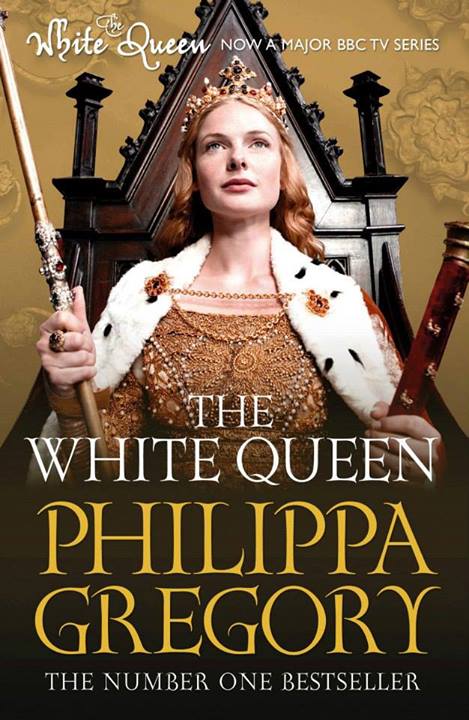
I was thinking about the Wars of the Roses the other night (partly as a result of the BBC series The White Queen, based on the Philippa Gregory novels. There are 5 English monarchs who feature in the series, and they all were alive during 1470-71:

  • Henry VI (1421-1471), Lancastrian claimant to the throne
  • Edward IV (1442-1483), Yorkist claimant to the throne
  • Edward V (1470-1483), Edward IV's son and successor
  • Richard III (1452-1485), Edward IV's brother and probable killer of Edward V
  • Henry VII Tudor (1457-1509), eventual victor of the Wars of the Roses

This set me to wondering what the greatest number of English monarchs to be alive at once is (excluding consorts like Elizabeth Woodville and so on).

I could think of a few other possible times where there were plenty alive at once. Just before Victoria's death, for example, her successors Edward VII, George V, Edward VIII and George VI were all alive, which gives us another 5. They could conceivably have all appeared in the same photograph as well!

But I suspect the winning period is from 1683-1685, where the following monarchs were all alive:

  • Charles II, king of England until his death in 1685
  • James II (1633-1701), his brother, deposed in 1688
  • Mary II (1662-1694), James' daughter
  • William III of Orange (1650-1702), Mary's husband but co-regent and continued to reign after her death
  • Anne (1665-1714), Mary's sister, who died without surviving children
  • George I of Hanover (1660-1727) was Anne's closest living Protestant relative at her death - the first 50 or so were all Catholics!
  • George II (1683-1760), George's son

That makes 7, due to one person being deposed by Parliament, a co-regency, several people dying childless and the throne passing to an older distant relative! I can't find any other points in history with even 5 or more, so I suspect 1683-5 is the winner... Any comparative results for other countries?

Tuesday, June 25, 2013

Sword and Scimitar - Simon Scarrow

I'm usually quite a fan of violent historical fiction, of which Simon Scarrow is one of the leading exponents. This book undoubtedly gets two out of those three very well.

It's set around the siege of Malta in 1565, which was one of the key battles between the Ottoman Turks and the European powers. It was also one of the most viciously fought battles in history; but it's the history that lets Scarrow down badly.

The fictional side of it is done well – it's grippingly written and I wanted to keep on reading even though the eventual outcome of the battle is obvious from the fact that Europe did not turn Muslim in the late 1500s and Malta's capital city shares a name with the commander of the defending garrison. Yes, there's very little characterisation, but if you want historical fiction with romances and more than one developed character, read Philippa Gregory or Hilary Mantel rather than Simon Scarrow or Bernard Cornwell.

I expect he's probably right on most of the military details, including one scene which was almost too much even for me with the level of violence (think a few armoured Turks versus a horde of women and children). If anything, the violence is overdone – I'm pretty sure that being shot with a primitive musket does not make someone's “head explode like an overripe watermelon”. I'm willing to believe that the Turks deliberately desecrated one of the altars by killing a knight on it; I'm less willing to believe they'd have been ordered to do that with the line “Slaughter him like a pig!” Muslims don't kill pigs at all; still less sacrifice them on altars.

What really got on my nerves was the main character's thought life. The book includes some Q&A with Scarrow at the back – here's an extract.

Authors want to reproduce the era they are depicting with the greatest possible fidelity. That is part of the unwritten contract with the reader and it is why we spend so much time on research to get the details (large and small) correct. Readers, myself included, like to be immersed in the everyday apparatus of the past.

... By modern standards our ancestors would be considered a thoroughly cruel, sexist, racist and religiously fanatic bunch and we would find it pretty tough to empathise with them, let alone actually like them.

Isn't that therefore the job of the historical fiction writer – to help us to understand and empathise with characters (real or fictional) from the past? It's what Mantel does so well. It's what Richard Harris does in his Julius Caesar series. Past people are still people, and a good historical writer helps us feel that we understand them better.

Instead of that, Scarrow imports a very modern (and uninformed) set of thoughts. So the main character, Sir Thomas Barrett, spends much of the book thinking how silly religion is and how it causes lots of wars. Granted, most of the wars in Europe in the 1500s and 1600s had religious motives. But the 1300s and 1400s were no less bloody, and those wars (e.g. War of the Roses, Hundred Years War) tended to be to do with dynastic succession. To a knight in 1565, wars in Europe being caused by religion would be a new idea. By the 1700s and 1800s, people by and large didn't care about religion as much, and there were no fewer wars – they just tended to be about empire rather than religion. The fact is that wars are caused by people, and people find excuses for their wars, whether to do with dynasty, religion, empire, politics or whatever.

All in all, not as good as I was hoping. Not one of his best, and anachronistically anti-Christian.

Tuesday, June 18, 2013

How conscious were the Old Testament authors of Christ?

There's a bit of a debate about preaching the Old Testament as Christian Scripture (which of course it is) - specifically whether we should preach as though the Old Testament authors knew they were writing about Jesus.

Here's an example of what I mean from the frequently excellent Glen Scrivener:

So how do we keep those two things together: Christ-focus and authorial intent? Only by saying that the OT in its own context is consciously a proclamation of Christ – His sufferings and glories. Without an insistence that the Hebrew Scriptures are already and intentionally Christian – without maintaining that ‘the lights are already on’ – then the “true and better” typology stuff will be good for a sermon or two, but it won’t transform our preaching or our churches.

Are "the Hebrew Scriptures already and intentionally Christian"? I don't think it's as simple as yes or no, and I'd like to illustrate it from three passages I've preached on in the last few months.

Psalm 44 - they can't be!

Psalm 44 is one of the darkest passages in the Old Testament. I don't think that the human author of Ps 44 can have been conscious of Christ when he was writing, otherwise he was being unfaithful.

In v1-8 the Psalmist looks back at God's past action in history, and praises him for it. It's centred on v4 - “You are my king and my God, who decrees victories for Jacob.”
v9-16 are then a series of accusations levelled at God – that it feels and looks like he has taken them to a charity shop and dumped them there.
v17-21 are the Psalmist pointing out that they had not done anything to deserve this punishment.
v23-26 are the Psalmist therefore asking God to wake up and help them because of his unfailing covenant love.

v22 is really interesting. “Yet for your sake we face death all day long; we are considered as sheep to be slaughtered.” There are definite echoes of all sorts of things, but the core idea is that the people are suffering and dying for God's sake – because of him. Perhaps it is opposition to them because they follow God faithfully, and he does not seem to be protecting them.

In Romans 8, Paul takes v22 and quotes it. He treats it as an example of the kind of sufferings which Christians experience in this life, and then goes on to say “No, in all these things, we are more than conquerors through him who loved us.”

My point is this. I do not doubt that Psalm 44, rightly understood is about Jesus. It is really helpful to see it as a song that Jesus sings, speaking of his undeserved suffering for the sake of following God. It is wonderful to notice in v22 that even when we suffer like sheep to be slaughtered, we are following in the steps of the one who became like a sheep to be slaughtered for us. But a Christian take on it requires a stronger vision of God's final victory. All that Psalm 44 has is confidence in God's character on the basis of past action; it is a backward-looking faith rather than the resurrection faith which looks forwards to God's final victory and restoration of all things. That's why the way Paul uses Ps 44 in Romans 8 is so significant – Paul shows how the wonderful truths he has been writing about transform even the darkness of Psalm 44.

Psalm 45 – they must be!

The very next Psalm is a complete contrast in lots of ways. It is a wedding Psalm, which transforms the darkness and despondency of Ps 42-44 into the triumph and security of Ps 46-48. The first half of the Psalm (v2-9) are praising the king, and his language gets more and more exalted, famously reaching the heights of v6-7.

Your throne, O God, will last for ever and ever; a sceptre of justice will be the sceptre of your kingdom. You love righteousness and hate wickedness, therefore God, your God, has set you above your companions by anointing you with the oil of joy.

Some people try to weasel out of the king being called “God” here, generally unsuccessfully. Perhaps the best such suggestion is that v3-6 are a prayer to God, which happens to be in the middle of v2-9 addressing the king. But there's no textual evidence for it, and in any case Hebrews 1:8-9 treats it as a continuous section addressing Jesus.

At the very least, you end up with something like G.H. Wilson's position in the NIVAC commentary, where he argues that this Psalm was kept even in the exile because Israel were holding onto God's kingship and marriage to his people even after earthly kings and royal weddings had ceased. In any case, it looks very much as if the Psalmist sees through the earthly royal wedding he is writing for to the wedding of God and his people – of Christ and the Church.

Are "the Hebrew Scriptures already and intentionally Christian"?

I think the best way to answer this question is to recognise the dual authorship of the Scriptures. There is the human author (and sometimes editor too!), and there is the divine author. The same passage can be rightly attributed to both David and God, as with Psalm 110.

Given that, it makes perfect sense to say that for the divine author, the Hebrew Scriptures are already and intentionally Christian, since the author of them is God the Holy Trinity. Certainly to preach them in a way which does not point to Christ is to ignore their significance, and is a fundamentally non-Christian hermeneutic.

But are the Hebrew Scriptures already and intentionally Christian in the mind of the human author? I'd want to say “sometimes, but not always”. What does that mean for preaching? It means we have to work at it!

The third passage is Joshua 2, and I'll try to cover that next time...

Tuesday, June 11, 2013

Homosexuality and the Church - One Last Time

It's a difficult issue to avoid at the moment, largely because culture seems to be moving fast, and in a direction that is away from historic Christianity. There are three big issues here, and it's important to recognise that they are distinct issues - far too many people on all sides confuse them, to their peril.

1. What should our attitude be to people who experience same-sex attraction?

Simple - Love and compassion, same as everyone else. Sure, they are sinners, but so am I. Their same-sex attraction is not the most important thing about them, and we should resist labelling them as such. For years people have suffered opprobrium because of feelings they did not choose to have, and now they have become a political football. Treat them as individuals whom God loves, just like you are.

2. Is same-sex sex consistent with Christianity?

Again, the answer is pretty simple - No. Quite a few people disagree, but they always seem to do so on the basis of trying to treat people lovingly rather than having actually looked at the texts - they seem to twist the Bible's teaching on this to make it seem more compassionate. And I understand where they are coming from, I really do. But I still haven't seen a single decent argument from the Bible that same-sex sex is a good thing or a single respectable Bible scholar who argues that either Jesus or Paul would have approved of it. For those who do try to argue that same-sex sex is consistent with the Bible, here are a few questions which show the futility of their position:

  1. If Paul had been told about a same-sex couple who wanted to marry and have consensual sex, do you honestly think he would have approved? (see here for Andrew Wilson pushing Rob Bell on that very question, which Bell keeps on avoiding.)
  2. At the time the New Testament was written, were there people who were gay in the modern sense of the word? (if yes, then Paul wasn't just speaking into the context of pederasty; if no then orientation is only a social construct)
  3. Can a human life be perfectly fulfilled without sex?
  4. If you could be convinced that the New Testament condemned all same-sex sex, would you agree with it?

John 8 is a wonderful passage for thinking through our response to individuals. Having stopped all the criticism and condemnation of the woman there, Jesus turns to her and says "Neither do I condemn you; go now and leave your life of sin."

It's also worth saying that there's a big question for the church to wrestle with here. The Bible clearly speaks a lot about the value of same-sex friendships, and for centuries it was accepted as normal for two male friends to share a house without having sex. The question is "if there are two men who experience same sex attraction, and want to live together as friends but without having sex, is that ok?" I'd say yes...

3. To what extent should we expect society to regulate itself by Biblical standards?

This is the key to the same-sex marriage debate. In general, the older generations think this is still a Christian country. Constitutionally, of course, it is, but that is becoming more and more of an anomaly and it wouldn't surprise me if the gay marriage issue leads to disestablishment in time.

It is clearly wrong to expect Christians to disengage their brains either when in church or when relating to the big political questions of the day. Because Christians believe that the Bible is in some sense a record of God's revelation into the world, they should therefore see that it does have something to say. And since Christians believe that God's revealed way of running our lives is better than the way we'd just figure out for ourselves, we also believe that society would be better if it defined marriage as one man and one woman for life.

But I don't think that's the issue any more. In the 1960s, bishops argued that just because homosexual sex was a sin did not mean it should be a crime - it should be in the same category as greed and pride. We accept that same-sex sex should be legal now; we even accept that it makes perfect sense for there to be a form of legal recognition for same-sex partnerships. None of that is an issue any more.

4. So what's the problem?

The issue with the currently proposed law is none of those. If the proposed legislation were to rename "civil partnerships" as "same-sex marriages", I don't think there would be anywhere near as much opposition. The problems with the proposed law are essentially threefold.

  • First, it is a big change without any mandate - it wasn't in a manifesto, there hasn't been proper public debate, etc.
  • Secondly, it is desperately trying to say that two different things are in fact the same thing, and not quite managing it.
  • Third, by saying that same-sex marriage is the same as marriage, it's opening the door for future discrimination against those who disagree on principle. I don't see the quadruple lock as surviving a legal challenge once same-sex marriage is ensconced as a human right, and I'm willing to bet we will see ministers and churches taken to court over this within the next decade.

Tuesday, June 04, 2013

Christians and the OT Law

Here are 10 quick tips on how to apply and understand the Old Testament Law as Christians.

  1. The Law isn't just commandments. The Jewish word usually translated "law" - Torah - actually refers to the first 5 books of the Bible. What we read as commandments are set within the context of story, and are inseparable from it.
  2. The Law was always about how to respond to salvation. Just before the 10 Commandments are given comes the wonderful Exodus 19. The Law, for the people of Israel, was about how to respond to the fact that God had already saved them, and how to continue as God's saved people.
  3. The Law was given to the nation of Israel - it was given in a specific time and context to a specific group of people to show them how to respond to God saving them from slavery in Egypt. It wasn't given to 21st century Gentile Christians living in the UK (or anywhere else). So it doesn't apply directly to us.
  4. The Law was given in the knowledge it wouldn't be kept. Just after the commandments finish, in Deuteronomy 32, comes a wonderful song from Moses responding to the law. And in it, he recognises that the people won't keep the law and will need saving again. Jesus isn't therefore a Plan B, he is part 2 (or 3, or whatever) of Plan A. The Law shows us that we are incapable of keeping it, despite the best possible carrots and the worst possible sticks. The problem is the human heart.
  5. Jesus is the perfect Law-keeper. But Jesus kept the Law perfectly. He did what we could not do.
  6. Jesus embodies the character of God as revealed in the Law. He doesn't just fulfil the Law by not breaking it - he shows us more clearly the God who gave the Law.
  7. Jesus is the answer to the problem posed by the Law. The problem the Law shows is that even if God rescues us, we still can't live up to it. Jesus solves that by rescuing us from our own inadequacy, from God's right anger against that inadequacy, and by giving us his Spirit to live in us and transform us.
  8. The Law reveals the character of God our Father, especially in the importance of love - loving God and those around us, as well as showing us worked examples of what that love looks like in the culture of the time. We can therefore apply it to how we should respond to God's greater salvation in Jesus, but to do that takes work. There's a great outline of how to go about it in CJH Wright's book Old Testament Ethics for the People of God.
  9. The Law leads us to God the Son, and shows us our need of his sin-bearing sacrifice.
  10. The Law shows us our need for transformation by God the Holy Spirit. In New Testament thought, the Spirit replaces the Law. That is why there are so many parallels between Pentecost and Sinai.

What have I missed off? Anything important?

Thursday, May 23, 2013

Seven Days That Divide the World – John Lennox

I know that the whole creation / evolution argument is (or should be) old hat now, but it still rumbles on in some corners, and seems to be very much live in the USA. Maybe it's just that I got fed up of the poor reasoning on both sides of the argument and dropped out of it a while ago.

John Lennox is one of the best writers and speakers in the debate at the moment. His previous books God's Undertaker and Gunning for God are among the best I've read on science/religion and apologetics, so I was expecting good things of this one too. I wasn't disappointed. Well, I was, but not to start with...

The first three chapters are the best thing I've read on the creation / evolution debate in a long time. Lennox frames it by using the heliocentrism debates of the 16th-18th centuries to show that one generation's dogmatic insistence on one interpretation of the text in the face of science is another generation's mad over-literalism.

The next chapter is a bit of a let down. Lennox debunks a lot of the common myths in the creation / evolution debate but ends up committing himself to the odd view that the universe is old, that apes evolved but that Adam and Eve were a direct creation. In doing so, he argues that young earth creationists should accept that their view flies in the face of the scientific evidence but ignores the significant genetic evidence that we share ancestry with apes just as much as they do with each other. It seems to be almost a worst of all possible worlds view – he avoids over-literalism in the understanding of Genesis 1 and affirms the importance of scientific evidence, but then ignores the scientific evidence on the basis of what looks like an over-literalistic reading of a single verse. Alternatively (i.e. from a YEC point of view), he rejects large amounts of what the Bible says in favour of dodgy science, but still tries clinging onto one bit of it.

Chapter 5 is closer to a return to form. Lennox examines what the point of Genesis 1 actually is, if it isn't to teach specific details about how the universe came to exist. There are still weaknesses in this chapter though – Lennox doesn't really get into the culture at the time Genesis 1 was written, so only sees some of how Genesis connects with today's culture. He doesn't point out how it shows God as the consistent and sole creator of the universe, which is so important for understanding of science. Of course Lennox believes that, but it's easy to miss it in Genesis 1 unless you see it as in part a reaction to the polytheistic creation narratives of surrounding cultures. Another example would be Genesis giving people the status that the other nations gave to their kings.

There's some of that in the appendices, when he discusses whether the Genesis account is derived from the Babylonian one, but Lennox never really draws out the significance of the important contrasts. The other appendices are pretty good, but never really get to the height of the first three chapters. The book is well worth the price just for those.

Tuesday, May 14, 2013

Cranmer on Gosnell

Cranmer has done an excellent post about the Kermit Gosnell trial.

"The nation cries out for a latter-day Shaftsbury or Wilberforce in Parliament who will bang on about this barbarism ad nauseam, day after day, week after week, until something is done about it."

Some of the comments are slightly confused though. It's perfectly consistent to be anti-abortion but pro-death penalty. After all, the babies haven't done anything wrong, and it's still possible to believe that we can do something that forfeits our right to live. I don't think the death penalty is appropriate though - I think there's too much potential for abuse with wrong verdicts and so on.

In fact, from a logical point of view, it's much easier to be pro-death penalty and anti-abortion than vice versa.